
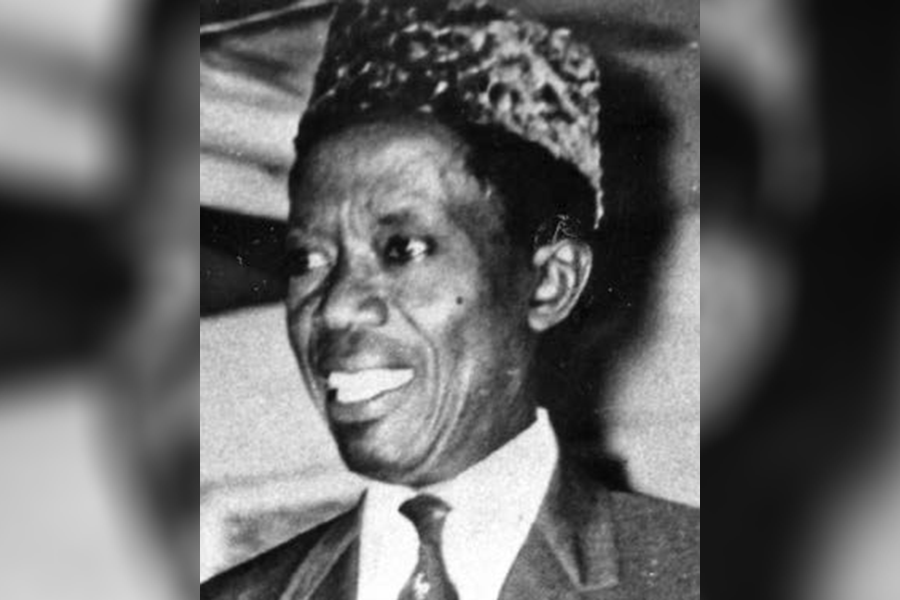
Uganda marked the passing of one of its most influential political and religious figures on this day in 1991, when Prince Badru Kakungulu died, closing a defining chapter in the history of Kibuli and the country’s Muslim leadership.
Born in 1907, Kakungulu belonged to Buganda’s royal lineage as the son of Prince Nuhu Mbogo, a brother to Kabaka Mutesa I. His father had risen to prominence during the religious wars of the 1880s, eventually becoming the recognised leader of Uganda’s Muslim community after renouncing his claim to the throne in the interest of stability.
When Nuhu Mbogo died in 1921, Kakungulu inherited that leadership at just 14 years old, assuming both spiritual and political authority over Muslims in Uganda.
Under his stewardship, Kibuli Hill evolved into the centre of Islamic life in the country. Kakungulu donated land for key institutions including Kibuli Mosque, Kibuli Secondary School and Kibuli Hospital, laying the foundation for a lasting religious and social legacy.
He was also a strong advocate for education. In 1947, he co-founded the Uganda Muslim Education Association, an initiative aimed at promoting formal education among Muslims at a time when missionary institutions dominated the sector.
Kakungulu’s influence extended into national politics. He was a founding member of the Kabaka Yekka party and played a pivotal role in forging its alliance with Uganda People’s Congress, a partnership that helped deliver Uganda’s independence in 1962 under Milton Obote.
His political standing suffered during the 1966 crisis, when Obote attacked the Lubiri and abolished traditional kingdoms. Kakungulu was arrested and imprisoned, an episode that later reinforced his image as a defender of cultural institutions.
His leadership within the Muslim community was not without contest. In the 1960s, the emergence of the National Association for the Advancement of Muslims challenged Kibuli’s dominance, creating divisions that persisted for years.
Following Idi Amin’s rise to power in 1971, rival Muslim factions were consolidated under the Uganda Muslim Supreme Council. Although Kakungulu stepped back from formal administrative roles, he remained a respected elder and symbolic figure.
Remembered as both a moderate and a moderniser, Kakungulu played a central role during Uganda’s transition from pre-colonial structures through colonial rule and into independence.
He was laid to rest at Kibuli in what was effectively a state funeral, cementing his legacy as one of the most significant figures in Uganda’s religious and political history.
